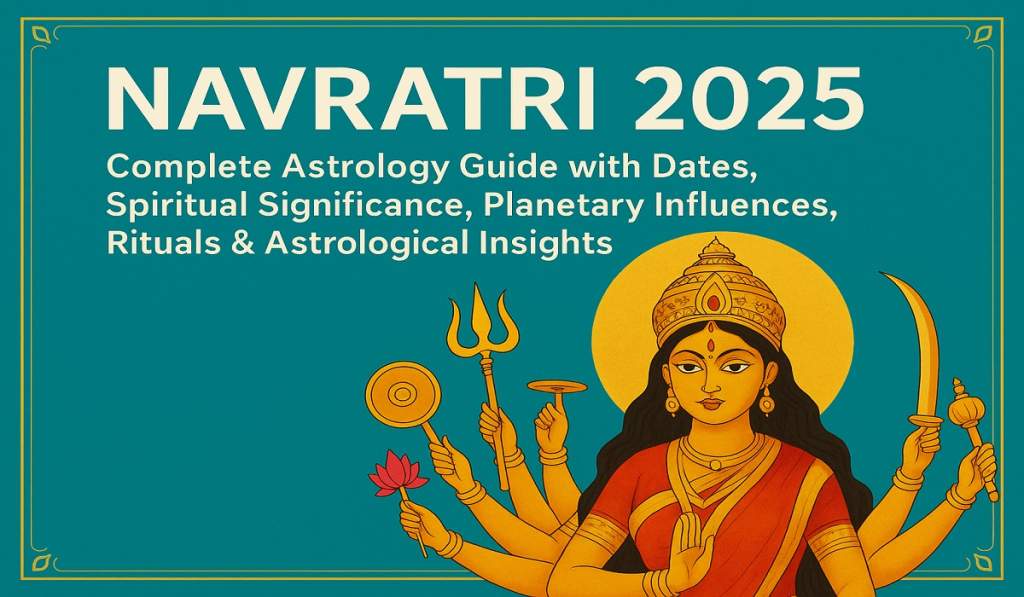
Navratri (meaning “nine nights”) is a major Hindu festival devoted to the Goddess Durga in her nine divine forms (Navadurgā). It symbolises the triumph of good over evil, spiritual renewal, inner purification, and awakening of feminine power (Śakti). The rituals, fasting, colours, pujas, mantras, and mythologies all combine devotional, cultural, and astrological dimensions.
Sharad Navratri 2025 Dates
-
Begins on 22 September 2025 (Monday), with Ghatasthapana / Kalash Sthapana.
-
Concludes with Vijaya Dashami / Dussehra on 2 October 2025.
-
According to the calendar, the Tithi (lunar day) of Pratipada in Shukla Paksha of Ashvina initiates the festival; the Dashami Tithi completes it.
Astrological Highlights for 2025
-
In 2025, Navratri extends over 10 days instead of exactly nine days, due to an extra Chaturthi Tithi, creating a rare alignment increasing its auspiciousness.
-
There is a special Ghatasthapana Muhurta (auspicious time) on the first day: 22 Sept between approx 6:09 AM and 8:06 AM, which is also Kanya Lagna (a rising zodiac sign) period.
-
Beginning on a Monday is considered significant in Hindu tradition for spiritual activity; 2025 Navratri starting on Monday adds to its energy for devotees.
Why this Navratri is special astrologically
-
The extended days (10 days) enhance ritual depth and opportunity for blessings.
-
The Sun’s position, shifting zodiac signs, alignment of certain nakshatras, and favourable muhurats amplify spiritual energy this year.
-
Colours, puja times, and mantra recitations are seen as more potent under these alignments.
Daily Themes: The Nine Forms, Their Astrological & Mythic Significance
Each day of Navratri is dedicated to a form of the Divine Mother (Navadurga). Each form has its attributes: mythological story, ruling planet, qualities to be invoked, and correspondingly a colour & ritual emphasis. Here’s a day-wise breakdown.
| Day | Goddess / Form | Myth & Symbolism | Ruling Planet (if ascribed) / Qualities | Colour of the Day | Key Devotional Focus & Rituals |
|---|---|---|---|---|---|
| 1 (Pratipada, Sep 22) | Maa Shailputri | Daughter of the Himalayas; represents purity, stability, root of devotion. | Often associated with Moon (mind, emotions, inner purity). Devotees focus on purity, stability. | White – purity, innocence, peace. | Ghatasthapana (Kalash set-up), invocation, chanting mantras, offering lotus, jasmine, ghee; meditate on stabilizing the mind. Emphasis on letting go of past grudges. |
| 2 (Dwitiya, Sep 23) | Maa Brahmacharini | Represents austerity, devotion, penance; the seeker. She walks the path of spiritual discipline. | Qualities of endurance, focus, sacrifice; guidance from planets that favor discipline (Mars, Saturn depending on one’s chart). | Red – vigour, energy, courage. | Fasting, japa (chanting), deeper meditation, offering items symbolic of austerity (rudraksha, simple food). Reflect on commitment. |
| 3 (Tritiya, Sep 24) | Maa Chandraghanta | Warrior-form; represents courage, readiness for battle (inner/outer), overcoming fear. Half-moon on her forehead symbolizes clarity, light after darkness. | Governs protection, getting rid of obstacles; planets like Mars, Moon’s strength are helpful. | Royal Blue – depth, strength, calmness. | Ritual to dispel fear, prayers for protection, strength; light lamps; possibly perform pujas around courage, protection. |
| 4 (Chaturthi, Sep 25) | Maa Kushmanda | Creator of the cosmic egg; brings life, energy, light in darkness. The Sun’s creative energy, spark of beginnings. | Tied to Sun energy, creativity, vitality, wellbeing. | Yellow – joy, warmth, vitality. | Focus on health, new ideas, creativity; offer yellow flowers/foods; prayers for energy, strength; possibly creative or philanthropic works. |
| 5 (Panchami, Sep 26) | Maa Skandamata | Mother of Skanda (Kartikeya), the leader of the divine army; represents maternal love combined with valour. She holds the child and the lotus. | Qualities of nurturing, protection, family welfare; planet‐related influences showing emotional bonds. | Green – growth, fertility, harmony. | Emphasis on family, children, care; offering of fruits and flowers; prayers for relationships; connecting with maternal qualities. |
| 6 (Shashti, Sep 27) | Maa Katyayani | Warrior aspect; fierce, defender; She grants boons especially for justice, success, sometimes desired partnerships/marriage. Mythologically she was born to sages to vanquish demons. | Bravery, determination, action; possibly alignment of one’s Mars, Sun, or other planets that support assertiveness. | Grey – balance between extremes, seriousness, strength. | Prayers for strength, for fulfilling important desires; if marriage is a focus, special rituals; inner work on overcoming inertia. |
| 7 (Saptami, Sep 28) | Maa Kalaratri | Considered the fiercest form; she removes darkness, negativity, ignorance. After Her blessing, fear is dispelled. | Planets that cause fear, confusion are pacified; this day is for deep purification spiritually and mentally. | Orange – vitality, fire, transformation. | Undertaking intense meditation, perhaps some form of discipline; remove negative thoughts; ritual to cleanse, burn away bad habits; offering red flowers, or fiery offerings. |
| 8 (Ashtami, Sep 29) | Maa Mahagauri | Represents purity, tranquility, compassion after the fierceness; She is white in hue; after the storm and battle, calm and peace. | Peace, purity, healing; possibly Venus, Moon influences are favorable; also aligning one’s inner equilibrium. | Peacock Green – mixture, subtle beauty, balance, freshness. | Kanya Pujan often done; feeding young girls (kanyās), offering pure foods; meditation on compassion, gentleness, forgiveness; rituals of purification. |
| 9 (Navami, Sep 30) | Maa Siddhidatri | She grants all siddhis (spiritual powers / fulfilment), both spiritual and material completeness. The final form, culmination of the journey. | Planet Ketu is sometimes associated; the energy of completion, letting go, deployment of wisdom. | Pink – hope, harmony, renewal. | Final prayers, havan, mantras; ask for blessings in all spheres (health, wealth, inner peace, wisdom); conclusion of fast, resolve; preparation for Vijaya Dashami. |
| Vijaya Dashami (Oct 2, 2025) | Victory day | Marks Goddess Durga’s victory over Mahishasura; also celebrates Lord Rama’s return to Ayodhya in epic stories. Symbolic of victory of light over darkness, truth over falsehood. | An important muhurta; time for concluding rituals, burning effigies in some traditions, immersion or visarjan of idol or symbol. | — | Propagate goodness, start new ventures, enact forgiveness, surrender ego; opportunities for prasāda, community feasting. |
Rituals, Practices & Astrological Remedies
Astrological and Vedic traditions attribute certain remedies, puja-procedures, and practices for optimal benefit during Navratri. These deepen the effects of the festival and help individual devotees align with favourable cosmic energies.
-
Ghatasthapana / Kalash Sthapana
-
This is the ritual to inaugurate Navratri: placing a sacred pot (kalash / ghata), filling it with water, adding mango leaves, coconut, etc., invoking Goddess.
-
Must be done in auspicious time (muhurta), which in 2025 is morning, 6:09-8:06 AM for first day.
-
-
Fasting / Vrata
-
Many observe fasts (full or partial) across the nine days. Sattvic diet (fruits, milk, nuts) is encouraged.
-
Fasting helps in mental purification, discipline, and intensifies devotional focus. Astrologically, fasting on days ruled by afflicted planets helps reduce their malefic effects.
-
-
Colour-Code & Dress Rituals
-
Wearing the colour corresponding to the Goddess of that day believed to align one’s aura / personal energies with that form. It enhances devotion, psychological alignment.
-
-
Mantras, Japa, Stotras
-
Chanting specific mantras for the Goddess of that day; repeating her name or attributes. Mantra recitation is believed to carry extra potency during the correct tithi and muhurta.
-
Recitation of Devi Mahatmya, Durga Chalisa etc.
-
-
Kanya Pujan
-
On Ashtami or Navami, worship of Kanyas (young girls) representing the Goddess. Serving food, gifts. A powerful act of humility and service.
-
-
Bhog / Prasad & Offerings
-
Specific offerings – flowers, fruits, sweets, lamps, incense. Some forms of Goddess prefer certain items (lotus, red flowers etc.).
-
-
Havan / Yajna
-
Sacred fire offerings, especially on the last day (Navami) or during midday. Astrologically, fire is an element linking with purification; having havan helps remove negativity.
-
-
Purification & Inner Work
-
Meditation, self-reflection, confession, letting go of negative habits. Since many Goddess forms correspond to destroying ignorance (Kalarātri) or bestowing peace (Mahagauri), times for introspection are valuable.
-
-
Timing (Muhurta, Nakshatra, Tithi)
-
Consult Panchang for the specific muhurats for any ritual one wants to do (e.g., starting new work, purchasing, vows etc.).
-
Avoid inauspicious tithis or nakshatras; use favourable ones. Since 2025 has special alignments, astrologers suggest that many puja times will naturally be auspicious.
-
Astrology & Navratri: How Celestial Bodies Interact
To deepen your understanding, here are some astrological ideas about how planetary positions, zodiac signs, nakshatras (lunar mansions), etc., interact with Navratri energies.
-
Sun in Libra / Virgo Transition: Around Navratri, the Sun is often transitioning through Virgo into Libra (depending on local chart and sidereal vs tropical zodiac). This shift brings themes of balance, relationships, harmony, justice. It’s a good phase to restore relationships, pay attention to fairness and social duties.
-
Moon’s Role: Since Moon governs mind, emotions, the nakshatra where Moon sits during these days affects how one experiences them. For example, if the Moon is in a benefic nakshatra, devotional moods deepen; if afflicted, there may be mood swings. Adjust rituals accordingly (extra mantra, more tranquillity).
-
Nakshatra Alignments: Some astrologers suggest that certain nakshatras (e.g. Pushya, Uttara Phalguni, Swati, etc.) during the festival are especially powerful. Choosing morning rituals when Moon is in favourable nakshatra enhances blessings.
-
Planetary Remedial Measures:
-
If any planet in your chart is weak or afflicted (e.g. Saturn, Rahu/Ketu, Mars), one can invoke the Goddess form of that day whose attributes oppose or pacify that planet.
-
Use gemstones, colours, fasting, mantras tailored for those planets.
-
-
Starting New Projects:
-
If you plan to begin something new (business, relationship, studies), starting after invoking proper Goddess form on a favourable tithi / muhurta can boost success. E.g. after Navratri or on Siddhidatri day.
-
Zodiac-Wise Opportunities & Suggestions for Navratri 2025
Here are potential benefits and cautions for each zodiac sign during Navratri 2025, plus suggestions on how to best use the festival energies.
| Zodiac | What 2025 Navratri Brings | Suggested Focus / Rituals |
|---|---|---|
| Aries (Mesha) | Mars-led energy; courage, initiative; possible challenges in patience. | On Kalaratri & Katyayani days, invoke protection, seek inner calm; avoid rash actions; use red / orange colours; mantra for Mars (e.g. “Om Angarakaya Namah”). |
| Taurus (Vrishabha) | Venus energy; desire for stability; focus on relationships, comforts; maybe creative impulses. | On Mahagauri & Skandamata, focus on harmony, compassion; wear green / pastel; offer white flowers; do chanting for Venus. |
| Gemini (Mithuna) | Mercury’s communication, travel, learning; restless mind; nodes (Rahu/Ketu) may influence. | On Brahmacharini / Chandraghanta, practice deep listening; avoid scattered activities; meditate; colour code helps (day 2 red, day3 blue). |
| Cancer (Karka) | Strong Moon influence; emotional sensitivity high; family, roots; healing potential. | Shailputri day good for inner cleansing; Kanya Pujan day for nurturing; use white, green colours; do rituals with water, moon-mantras. |
| Leo (Simha) | Sun’s power; confidence; leadership; risk of ego clashes. | Kushmanda & Katyayani favourable; act with humility; colour yellow; avoid dominance; share service; mantra for Sun. |
| Virgo (Kanya) | Practical, service oriented; attention to health, daily routines; opportunity to refine oneself. | On days like Skandamata & Siddhidatri, focus on healing, wisdom. Wear colours accordingly; pick muhurats to improve health or routines. |
| Libra (Tula) | Balancing relationships, fairness, justice; beauty, peace matters. | Use Mahagauri, Shailputri days to enhance harmony; wear soothing colours; do offerings in couples or social gatherings; avoid conflicts. |
| Scorpio (Vrishchika) | Deep transformation, letting go, intense emotional work; inner power. | Kalaratri & Chandraghanta days useful; on those days do purification; burning negativity; use mantra; avoid becoming too secretive. |
| Sagittarius (Dhanu) | Expansion, learning, philosophy, travel; risk of overextending. | Kushmanda & Siddhidatri for wisdom; read, study, plan; avoid impulsive journeys; wear bright colours; do journaling. |
| Capricorn (Makara) | Discipline, work, responsibilities; family obligations; need to balance. | Brahmacharini & Katyayani good; focus on duty, ethical living; perform service; colour-code as per day; simplify life. |
| Aquarius (Kumbha) | Community, ideals, innovation; social causes; but perhaps scattered energy. | On days favouring creativity and peace (Mahagauri, Skandamata), engage with friends, charities; use meditation to ground. |
| Pisces (Meena) | Intuition, compassion, spiritual insight; risk of escapism or illusion. | Siddhidatri & Mahagauri great for mystical and artistic pursuits; engage in mantra, art, music; keep mindful of boundaries. |
How to Make the Most of Navratri Energetically & Spiritually
To deepen the benefit of Navratri, here are suggestions combining astrology, ritual, mindset, and practice:
-
Set clear intentions at the start (Day 1): environmental, spiritual, personal growth. Invoke Maa Shailputri’s energy to ground these intentions.
-
Keep a spiritual journal: note feelings each day, insights, dreams. Which Goddess’s energy you felt most; where you experienced resistance.
-
Mind-body practices: Join meditation, yoga, or breathing exercises. Especially on dangerous or transformative days (like Kalaratri).
-
Charity & service: On auspicious days, giving (food, help, money) magnifies merit. Kanya Pujan, feeding the poor etc.
-
Purity & discipline: Eat clean/sattvic food; reduce anger, gossip; focus on truth; control senses.
-
Chant mantras daily: Using the mantra linked to daily Goddess form, or general Durga mantra. Even short chanting with sincerity is powerful.
-
Use colours consciously: Dress in that day’s colour, decorate your puja space accordingly; the visual vibration reinforces intention.
-
Protect against negativity: On days like Kalaratri, avoid negative people, thoughts; do cleaning of space; maybe incense or fire rituals.
-
End with gratitude on Vijaya Dashami: reflect on what you have gained, what to let go, maybe light fireworks or do a final puja, commence new work.
Mythology & Symbolism: Lessons Hidden in the Forms
Each form of the Goddess corresponds not merely to a ritual but to inner work. Reflecting on the mythic stories helps internalize lessons.
-
Shailputri teaches stability, roots, purity. Without a stable foundation, spiritual growth is shaky.
-
Brahmacharini: devotion, disciplined path, sacrifice. Choosing the path of focus over comfort.
-
Chandraghanta: bravery; face your fears; move into the battle with courage.
-
Kushmanda: creation; even from darkness (or difficulty) life can be sparked. Creativity arises in unlikely places.
-
Skandamata: balanced motherly love + strength; caring for others need not mean losing yourself.
-
Katyayani: righteous anger, assertiveness; slaying inner demons (laziness, negativity).
-
Kalaratri: extremes, darkness, destruction of illusions; often painful but necessary.
-
Mahagauri: after the storm, calm; purity, clarity, peace.
-
Siddhidatri: fulfilment; more than material – spiritual siddhi: wisdom, compassion, unity.
Potential Pitfalls & How to Navigate Them
-
Burnout: with fasting, rituals, social events, it’s easy to get exhausted. Listen to your body; fast partially if needed.
-
Rigidity: Don’t get too caught up in “rules” or “correct-form” and lose the inner devotional spirit. Astrological timings help, but sincerity matters most.
-
Expectations vs Reality: Sometimes results are not immediate. The energies set in motion over Navratri may manifest later. Be patient.
-
Distraction & Social Pressure: Celebrations can become more about outward show; focus must stay inner.
-
Neglect of Self: In serving others or in public rituals, don’t neglect rest, personal health or mental peace.
Practical Astrological Suggestions (For Everyone)
-
Check your personal birth chart: see which planets are weak or afflicted; during Navratri, pick days or forms that pacify those.
-
Use gemstones or rudraksha when aligned with the Goddess of the day (for example – red / coral for Mars days, yellow / topaz or citrine for Sun days). But only after proper astrological guidance.
-
Observe soman (moon) fasts or other fasting tied to lunar days if they coincide favorably.
-
Clean & purify your home especially before first day: this enhances the power of rituals.
-
If making new purchases or signing contracts, try to choose auspicious muhurats within Navratri (especially mornings, days with benefic planets or nakshatras).
Navratri & Life Realignment: Using The Festival for Personal Growth
Navratri offers more than religious ritual—it’s a chance to realign life purpose, clear what’s blocking you, and re-enter life with renewed focus. Here are ways to use this Navratri as a growth tool:
-
Shadow work: Kalarātri day is perfect for confronting fears, negative patterns. Journal about fears; seek healing.
-
Commitment to change: e.g., choosing to give up some habit; making a spiritual vow; starting a discipline such as meditation or yoga with the momentum of the festival.
-
Inner surrender: on days like Mahagauri or Siddhidatri, practice letting go—of ego, expectations, unhealthy attachments.
-
Visioning: Use the increased spiritual energy to visualize where you want to be in 1 year, 5 years. Write it down, pray for guidance.
-
Gratitude & relationships: Reinforce bonds – family, community. Forgive, reconcile; also show gratitude for what you have.
2025 Color-Guide & Fashion Tips (Astro-Social Integration)
Because colour is a visible and symbolic energy, matching your clothes, puja area décor, accessories with the day’s Goddess increases receptivity. Here’s the 2025 day-wise colour guide:
| Day | Colour |
|---|---|
| Day 1 | White |
| Day 2 | Red |
| Day 3 | Royal Blue |
| Day 4 | Yellow |
| Day 5 | Green |
| Day 6 | Grey |
| Day 7 | Orange |
| Day 8 | Peacock Green |
| Day 9 | Pink |
Tips:
-
Even if you don’t fully dress in that colour, use a piece (scarf, dupatta, accessory).
-
Decorate your worship space with flowers / rangoli in those hues.
-
Be mindful: colours also affect mood – red raises energy; blue calms; yellow cheers.
Final Thoughts
Navratri 2025 is astrologically rich. With a rare extended length, favorable muhurats, and meaningful cosmic alignments, it brings an enhanced opportunity for spiritual awakening, healing, and manifesting desires with purity.
It’s a festival of contrasts: austerity and celebration; fight and peace; discipline and grace. Moving through each day with awareness of the Goddess form, leveraging colours, mantras and rituals, we can transform inner darkness into light, ego into humility, fear into courage.
May this Navratri bring you strength, clarity, compassion—and fulfilment of the deepest aspirations of your heart.
A few powerful mantras you might use:
-
Om Devi Shailaputryai Namah
-
Om Devi Brahmacharinyai Namah
-
Om Devi Chandraghantayai Namah
-
Om Devi Kushmandayai Namah
-
Om Devi Skandamatayai Namah
-
Om Devi Katyayanyai Namah
-
Om Devi Kalaratryai Namah
-
Om Devi Mahagauryai Namah
-
Om Devi Siddhidatryai Namah
Related – Ketu in Astrology: The Mysterious Shadow Planet of Liberation and Spiritual Awakening